There are small places on earth that leave very large imprints on our hearts. Playa Viva, which houses the sea turtle sanctuary, La Tortuga Viva, is one of those places. They’re in the business of making memories in a place that holds environmental health in the highest regard.
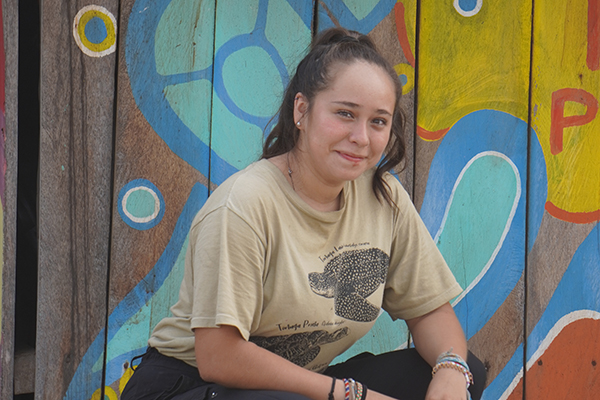
Located on the western coast of Mexico about 40 miles south of Zihuatanejo is a safe place for sea turtles to lay their eggs and send their babies off into the ocean. Community-led La Tortuga Viva is sustained through many hands under the watchful care of our featured scientist, Larissa Hernandez.
The World Beyond Her Snorkel Mask
Larissa was born and raised in Mexico City. “Mexico City is special in many ways: my mom’s cooking, the fun times with my dad, the adventures with my siblings, the pambazos and tacos, and the endless number of places to explore,” shared Larissa.
Larissa completed high school in Mexico City. When it came time to choose a university, she decided to move to La Paz, Baja California Sur, to study Marine Biology. She wanted to be “in a place where I could truly gain field experience—and what better place than the ‘aquarium of the world,’ as Jacques Cousteau once called it.”
“I was always curious about what existed beyond what I could see with my snorkel mask,” said Larissa. Larissa credits two exceptional biology teachers in middle school and high school for her love of marine biology. “My science teachers were committed to planting a seed of curiosity into every student.”
La Tortuga Viva
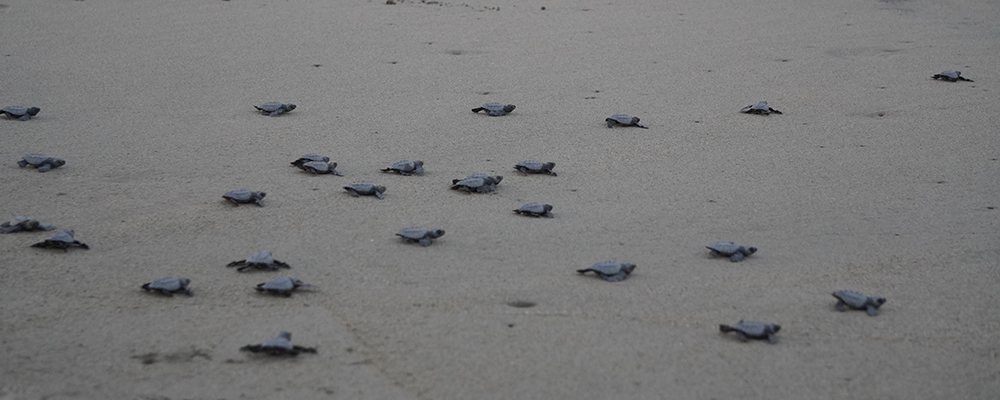
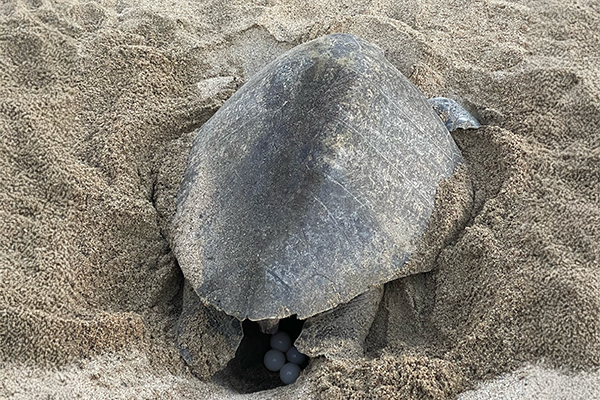
Every year thousands of Olive Ridley turtles and dozens of endangered Green and Leatherback turtles come to the shores of Playa Viva and turtle sanctuary, La Tortuga Viva, to lay their eggs. Over the past 50 years of commercial exploitation, poaching, and degradation of nesting and foraging habitats, six of the seven marine turtle species have been placed on the endangered species.
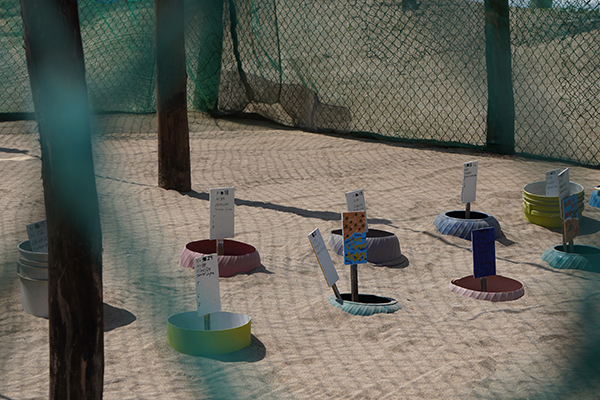
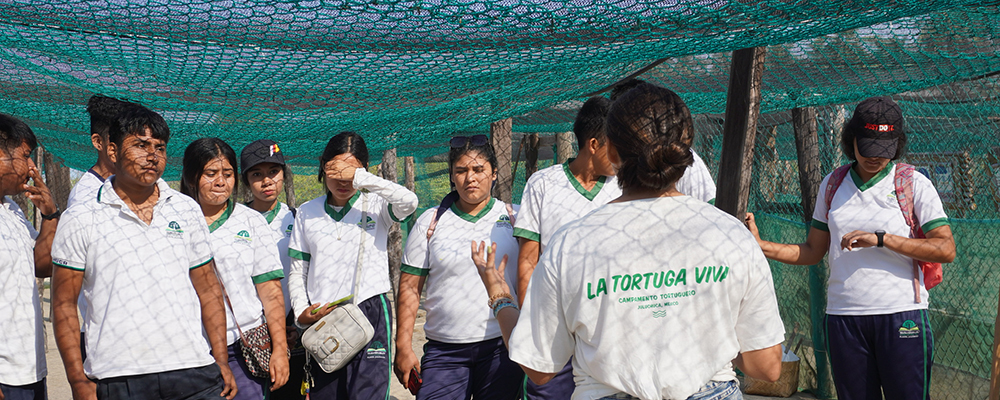
According to La Tortuga website: ‘The sanctuary is an incubation area where our team carefully relocates precious turtle nests rescued from the beach. Each nest is allocated a one-meter area in order to promote healthy incubation. A food source for many predators, sea turtle eggs face overwhelming odds. Predator-proof netting, audio stations, and scarecrows serve to deter badgers, crabs and other predators away from the sanctuary. The area allows nests to safely incubate and for baby turtles to hatch and emerge in a protected environment, hence we often refer to the sanctuary as a ‘nursery’ or ‘hatchery’. Our sanctuary has a visitor educational area to welcome groups of visitors and schools in a comfortable, shaded space’.
The Process of Protection
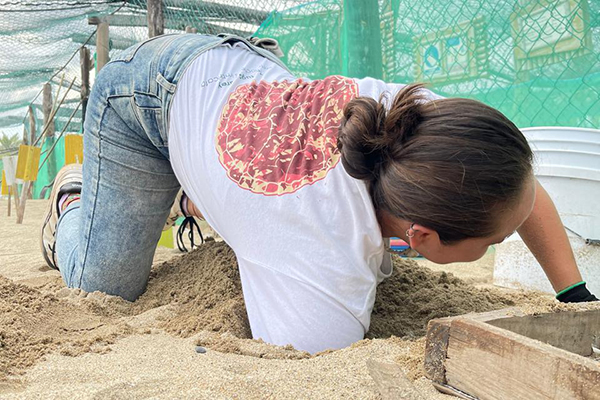
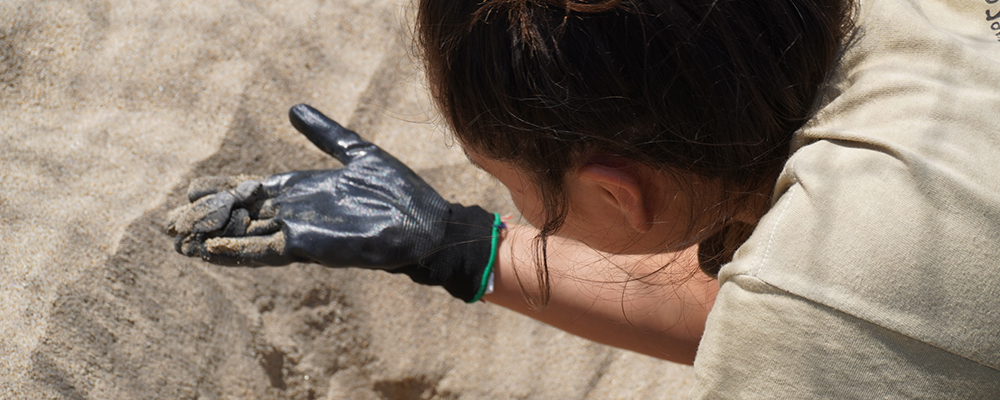
Larissa and her team patrols approximately eight kilometers of beach looking for turtle tracks or nesting turtles. When they find a track, they follow it until they reach the nest chamber. Using a stick, they carefully locate the exact position of the nest, and once it is found, they dig down to the eggs. The eggs are then removed from the sand, counted, and placed in a bag so they can later be relocated to the incubation hatchery.
When they encounter a turtle, the process is slightly different and takes more time. They must wait for the turtle to clear the area where she will nest, dig the nest, and begin laying her eggs. At that moment, they carefully dig a small hole near her cloaca, (excrement and birth product), without disturbing her, in order to begin collecting the eggs. The eggs are counted and later relocated to the incubation hatchery.
Connecting to the Stars, Surf and Local Community
For Larissa, the best part of rescuing marine turtles are the night patrols. During those hours, she not only has the chance to witness turtles nesting and hatchlings emerge, she also takes time to admire “the star-filled sky, enjoy the bioluminescence on the beach, listen to the sound of the waves, and, above all, build strong bonds with the people who walk beside me.”
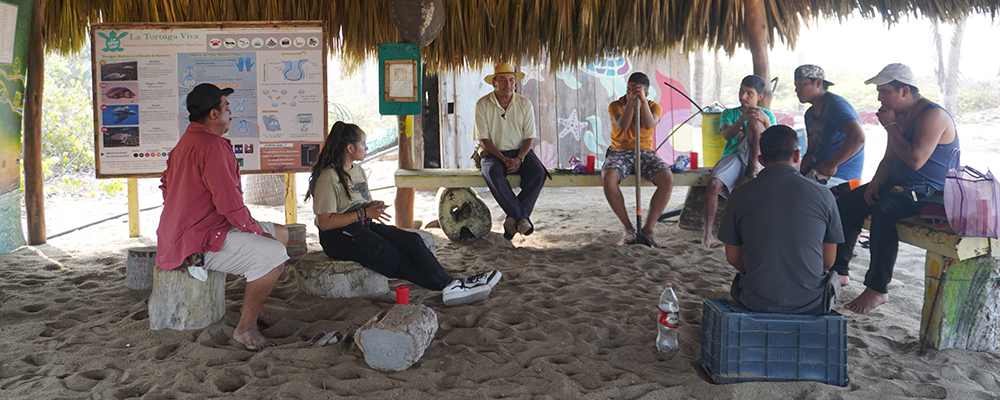
Larissa believes turtle conservation has given her the opportunity to connect with local communities. In her words, “I have learned not only about turtles but also about the local traditions surrounding turtle consumption in the past, their hopes for the future, and their perspectives on life in general.” Sea turtles are a very large part of the local history and life of the community.
The Important Role of Sea Turtles
According to Larissa sea turtle conservation is essential because turtles play a fundamental role in maintaining healthy ecosystems They regulate the growth of seagrass beds, help keep coral reefs resilient, and contribute nutrients to the beaches where they nest.
The Efficacy of La Tortuga Viva
One of the strongest indicators of La Tortuga Viva’s success is their community participation. The project is supported by the interest and active collaboration of 14 local volunteers who take part in turtle monitoring, data collection, nest relocation, and maintenance of the facilities.
Another indicator of success is the growing professionalization of their work. Over the last two years, they have implemented more detailed, science-based data collection methods throughout the camp.
They are most proud of their hatching success rate. Thanks to consistent effort and the application of best management practices, their incubation hatchery now has an 85% hatching success rate. That’s a 4% increase from the previous year.
La Tortuga Viva’s 2025 season has:
- Saved 760 nests and relocated them to their hatchery (753 olive ridley nests, six green turtle nests, one leatherback nest).
- Released 47,858 hatchlings into the ocean (47,419 olive ridleys, 414 green turtles, 25 leatherbacks).
“These numbers reflect not only the success of the project, but also the hope, commitment, and teamwork behind every nest and every hatchling we help reach the sea,” Larissa proudly states.
Special Work is Good Work
Larissa believes kids interested in science should be fearless of exploring the natural world and to “discover what truly excites you and makes you happy!”
“The best part of my work is having the privilege to dedicate myself to something that truly inspires me and makes me happy. I get to witness hatchling releases almost every day, and even after eight years of watching the entire process, I am always reminded that every release and every turtle is magical,” said Larissa. “The world of sea turtle conservation is a circle of friendship, trust, collective learning, and professional growth. That is what makes my work so special.”
Please also check this out to learn more about turtle conservation.