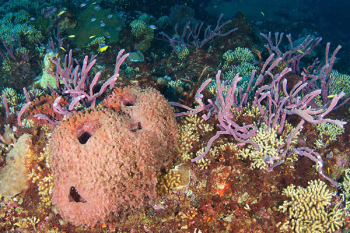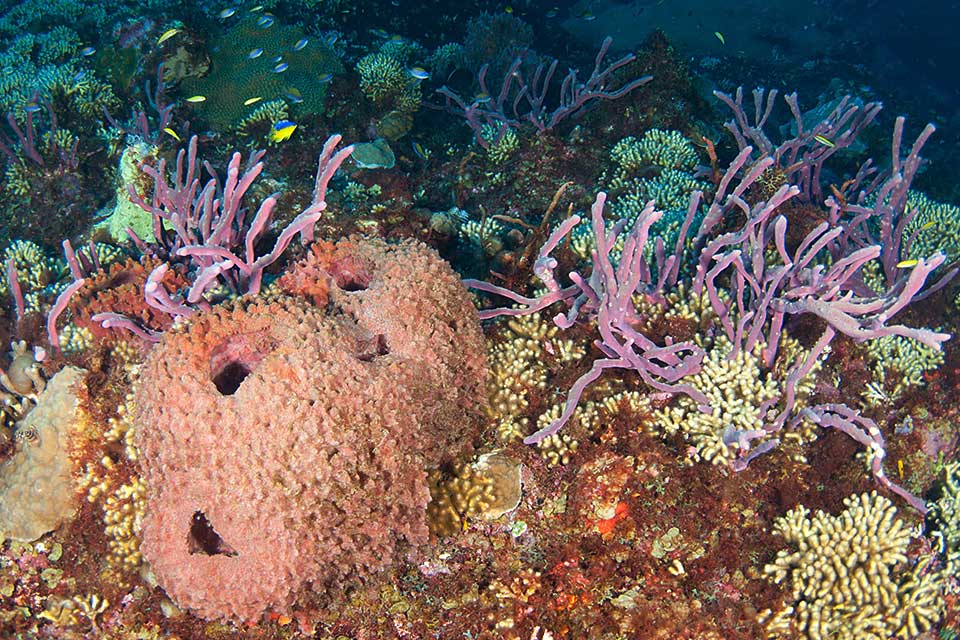
The ocean has absorbed more than 90% of the excess heat in the climate system. Global sea surface temperatures have been warming by nearly 1°C since 1900. Marine heat waves (MHW) come with this unprecedented warming. A MHW is defined as a period when seawater temperatures exceed a seasonally varying threshold (usually the 90th percentile) for at least 5 consecutive days.
Marine Heat Waves & Sponges
The ancient sponges live everywhere, from shallow to deep waters, from the tropics to the poles. Ocean warming is likely to impact sponges through the introduction of diseases. Since their defense mechanisms are compromised during heat stress, more will die. Heat stress can also limit a sponge’s reproductive and dispersal abilities.
Losing Color
Sponges have already died in several places due to high ocean temperatures. In the temperate waters off New Zealand, “A mass bleaching of more than 50 million sponges in Fiordland was the largest event of its kind ever recorded and is estimated to have cut the population by close to half,” a new study reports. Similar to coral bleaching events, sponges expel symbiotic microbes that give the animal color and provide nutrients. Sponge’s also dying of heat stress on coral reefs in the tropics.
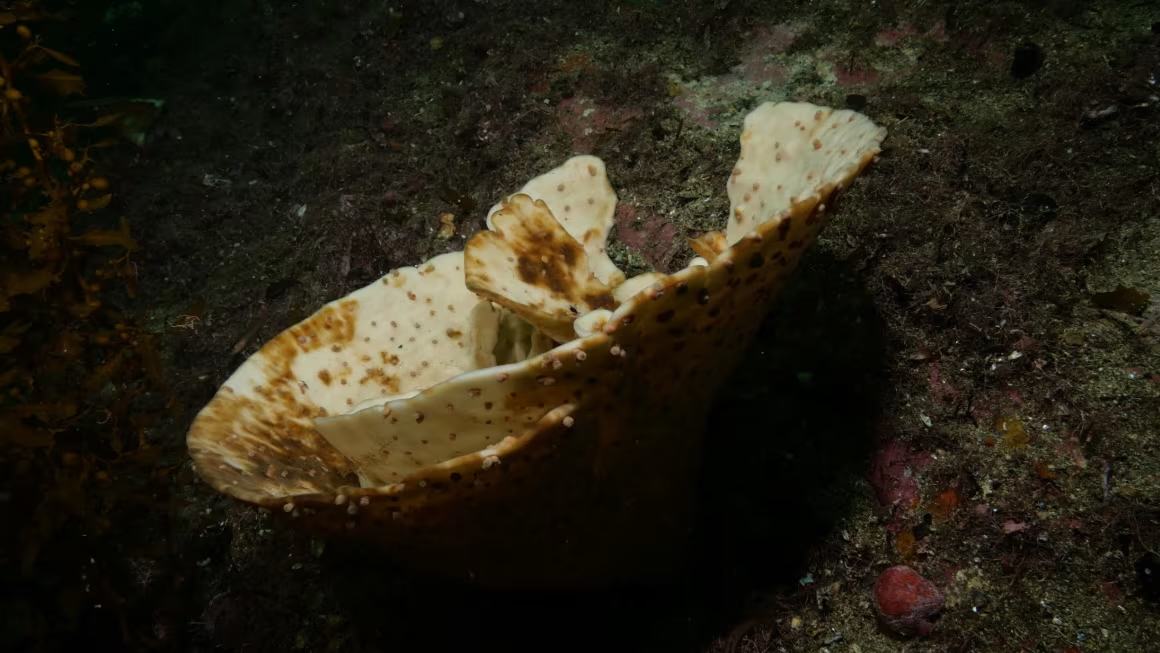
Sponge and Symbiotic Microbes
It remains a mystery as to why sponges are dying of MHW’s, but researchers are frantically trying to figure it out. Scientists believe the warming oceans are destroying part of this symbiotic microbe community which includes bacteria, fungi and archaea, key to sponges’ survival. They found that in one species of sponges died because of the sudden loss of a key microbe living in their tissue: “We found that this microbe was the only one that could detoxify ammonia produced by the sponge. And without this microbe, toxic ammonia would have accumulated in the tissue.”
Ocean Acidification (OA) & Sponges
Some sponges like our Featured Creature, the boring sponge, may benefit from a more acid ocean. There is little known about other groups of sponges’ response to OA, and scientists are investigating what the impacts might be: some sponges seem more resistance and others more sensitive to the changes in ocean chemistry. Though, overall, a picture is emerging that sponges seem to be tolerant of increasing acidification.