The Ediacaran Period (635 million years ago) was a precursor to the Cambrian Period 538.8 million years ago and it did have animal life. What these animals looked like is becoming clearer as more fossils from that time period are unearthed.
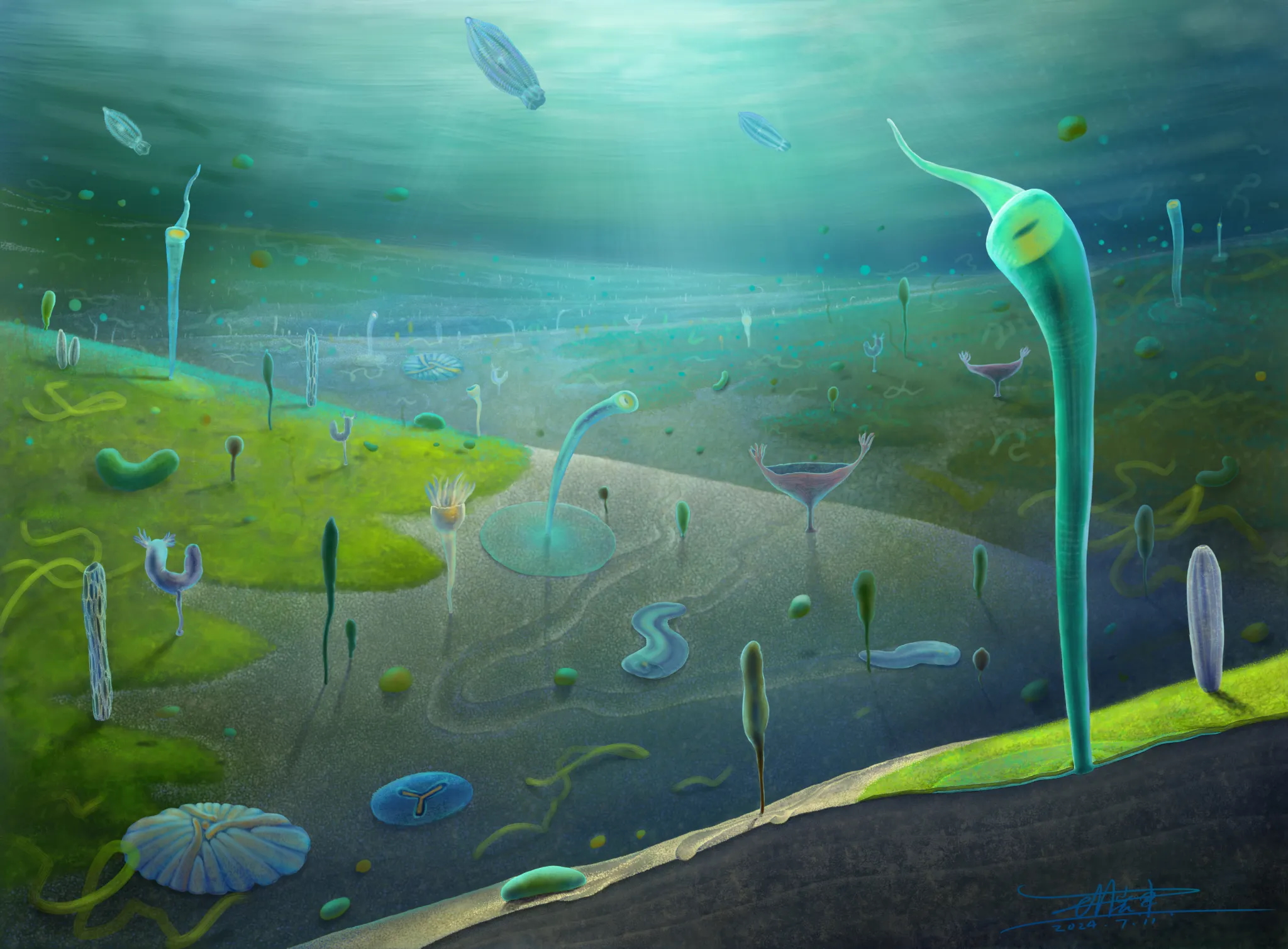
We talk a lot about the Cambrian Explosion and the body plans that evolved during that very important time in the history of animal life on earth. However, the period before the Cambrian, called the Ediacaran Period (635 million years ago to the beginning of the Cambrian Period 538.8 million years ago) did have animal life. What these animals looked like is becoming clearer as more fossils from that time period are unearthed.
Preserving Organisms
The fossils from this period are strange-looking, soft-bodied organisms that died on the seafloor, were buried and fossilized in incredible detail because at the time the chemistry of sea water was very different. The seawater in the upper sea floor was silica and iron-rich. Those minerals, combined with the clay sediment acted like cement, holding together sandstone particles and preserving outlines and replicas of the soft-bodied forms of the Ediacara animals.
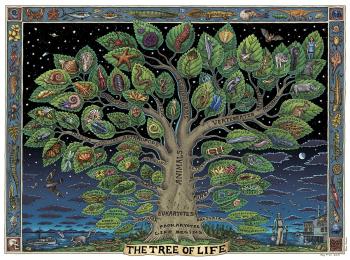
“The Ediacara Biota look totally bizarre in their appearance. Some of them have triradial symmetry, some have spiraling arms, some have fractal patterning,” says Dr. Lidya Tarhan, a paleontologist at Yale University. “It's really hard when you first look at them to figure out where to place them in the tree of life.”
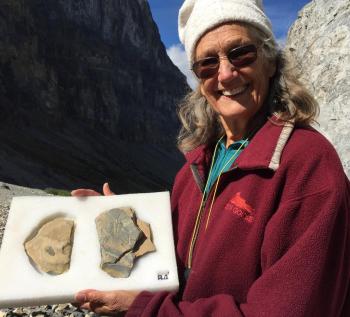
At a site in China, paleontologists found an array of these well-preserved fossils. Many of the previously found fossils of the Ediacaran period were just traces left in sandstone. At the Jiangchuan site in southwestern China, scientists found actual carbonized fossils, not just traces. The Jiangchuan Biota (as they are known) fossils are preserved as carbonized films, a mode of preservation more typical of famous Cambrian sites such as the Burgess Shale in Canada. A carbon film fossil, or carbonized or compression fossil, preserves an organism's remains in a two-dimensional pattern. The remains of an organism were exposed to tremendous pressure over time, such as being buried under sediments beneath a seafloor. This exceptional preservation reveals anatomical details such as feeding structures, guts and locomotory organs.
Sea Star Ancestor (Cambroernid) Fossils
“Most strikingly, the international team identified fossils thought to be the oldest known relatives of deuterostomes, the broader group that today includes vertebrates such as humans and fish.”
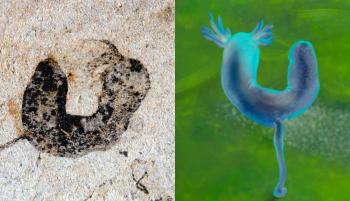
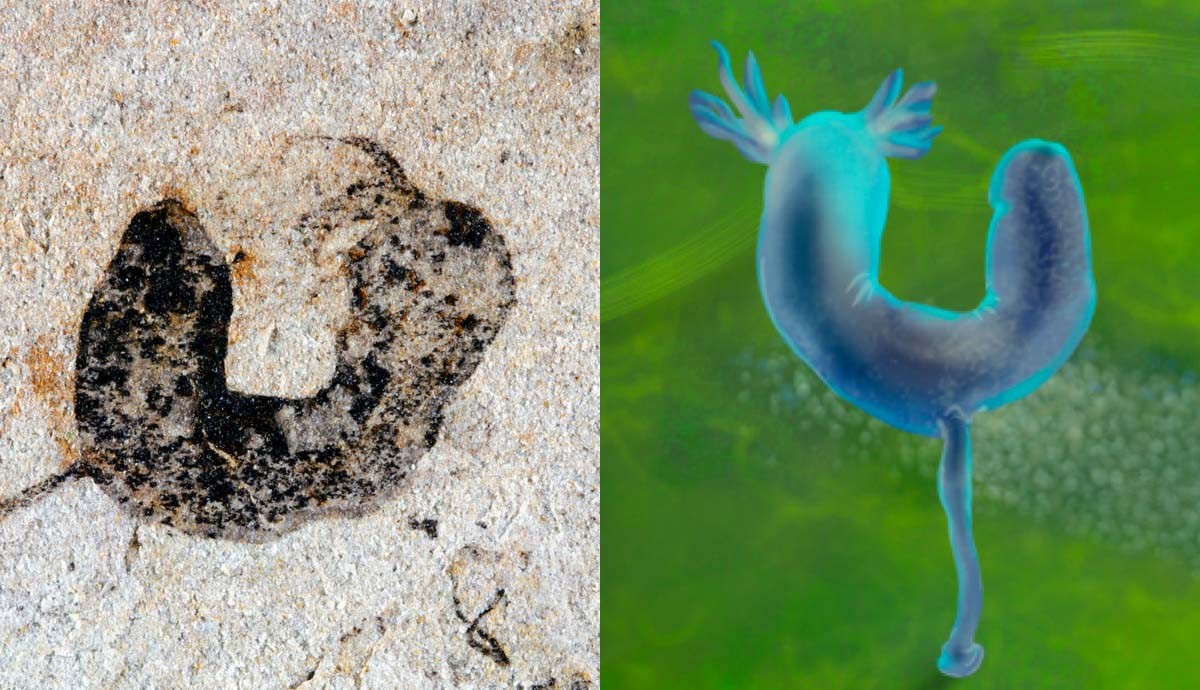
These cambroernid fossils are ancestors of modern sea stars and their closest relatives, the acorn worms. They have a U-shaped body and were attached to the seafloor with a stalk, and had a pair of tentacles on their head used to catch food. “The presence of these ambulacrarians in the Ediacaran period is really exciting. We have already found fossils which are distant relatives of starfish and sea cucumbers and are looking for more.”
How do we know about the fossils we find? Read our Paleontology Blog.