El Niño has arrived on the west coast. The event is marked by increased warming of the ocean down to 200 feet (60 meters). As of the end of October 2026, the temperature in Monterey Bay, for example, had reached 64 degrees Fahrenheit (18.18 C), the highest it’s been in decades and even higher than the previous strong El Niño of 1997. With the warming of the ocean waters with El Niño, marine creatures are moving north, expanding their ranges.
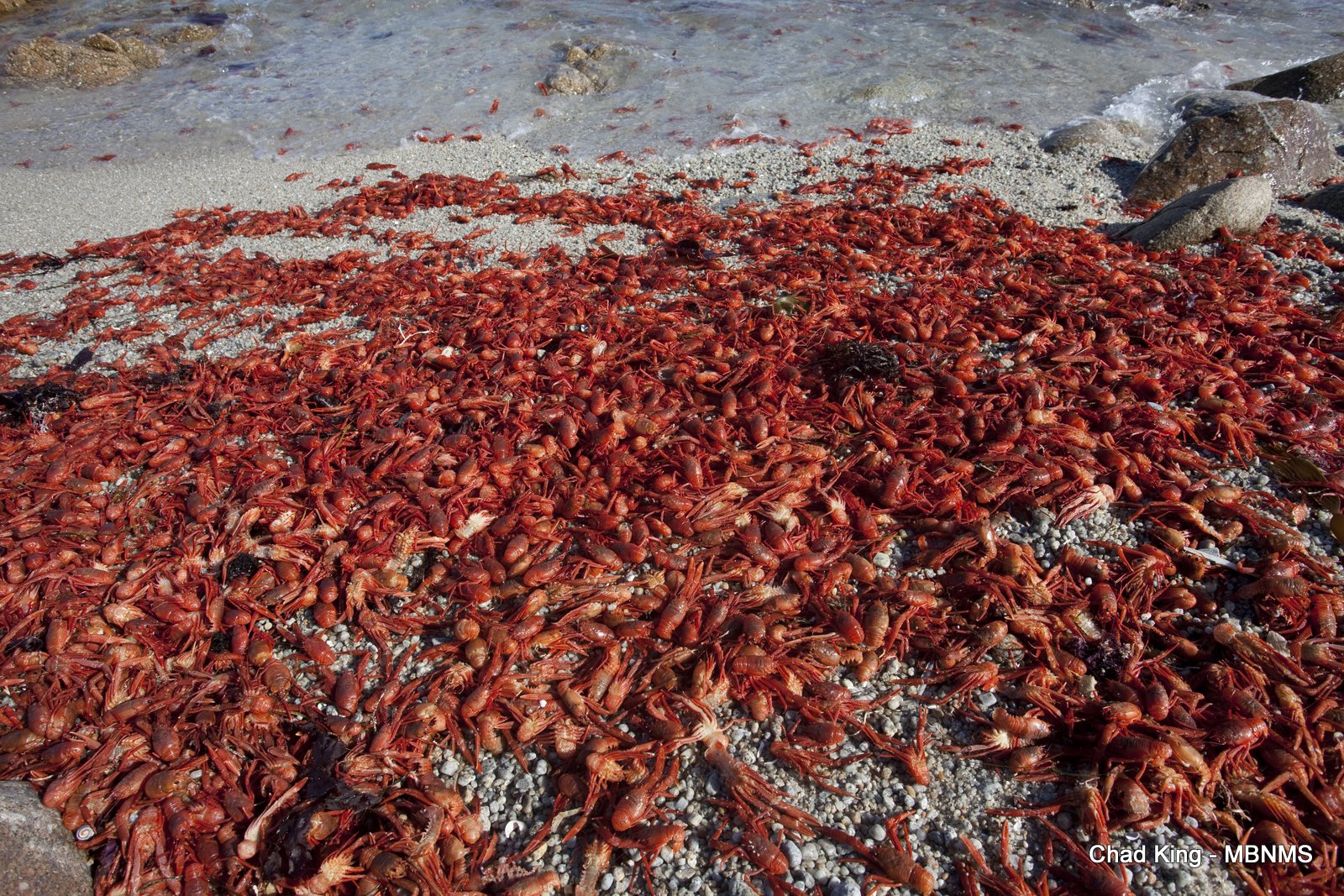
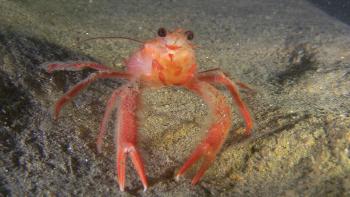
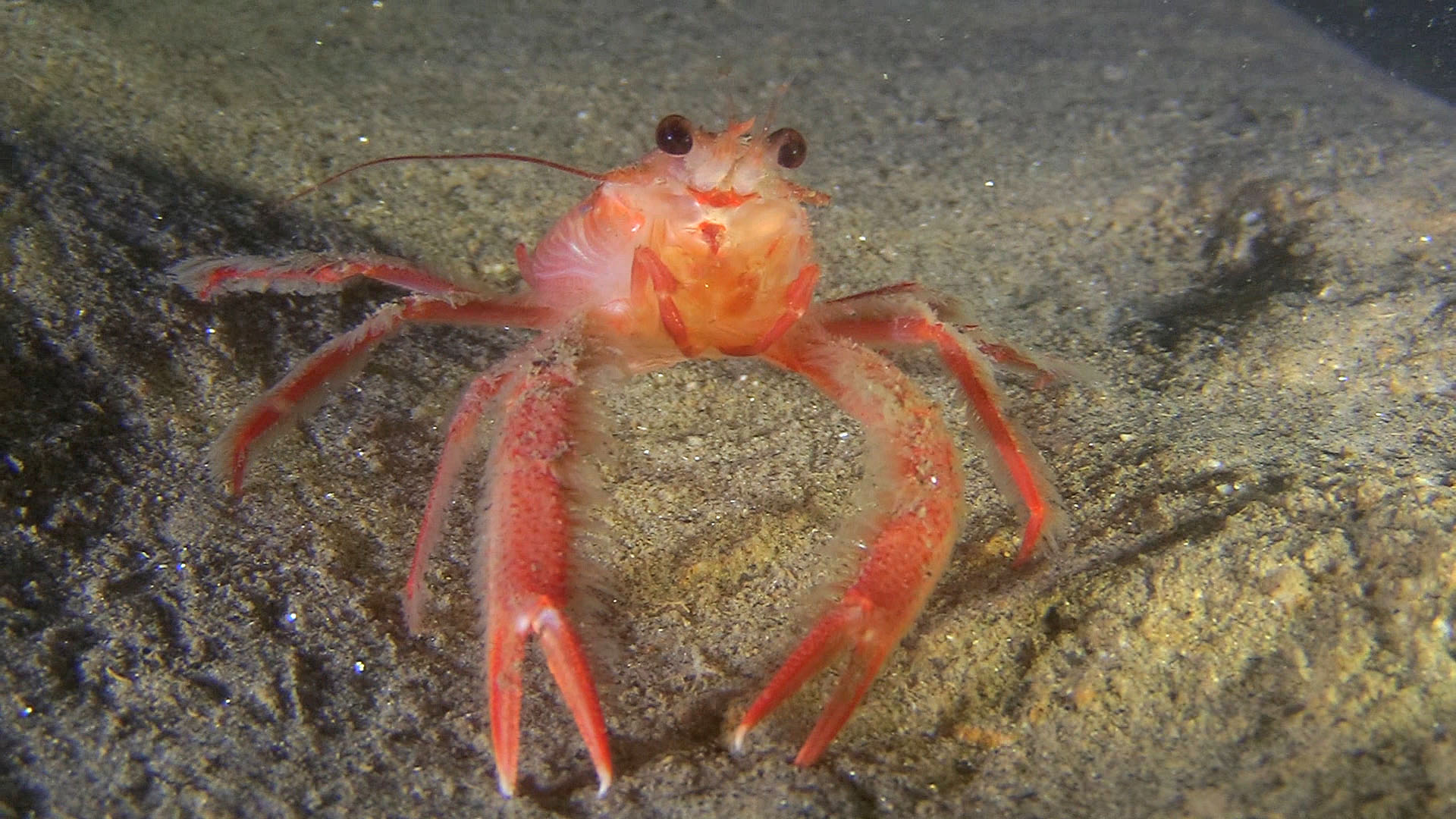
During El Niños past, pelagic red crabs have been common in Monterey Bay; normally they are found in large numbers off Baja Mexico where the water is warmer than Monterey Bay usually is. Pelagic red crabs aren’t really crabs, but squat lobsters. Unlike true crabs, they live where their name indicates, the pelagic zone: living in the open ocean. Adults are found inshore during the first half of the year, then migrate offshore the second half of the year.
Pelagic red crabs are filter feeders. Using hairs on their legs, they feed on phytoplankton and zooplankton. They are an important link in the food web as they’re preyed on by many fish species as well as seabirds and marine mammals when the crabs are swarming in the open ocean. And these crabs are also called tuna crabs because they are a favorite prey of tuna.
Moving On Up