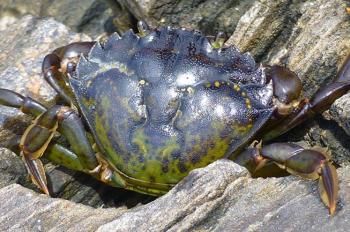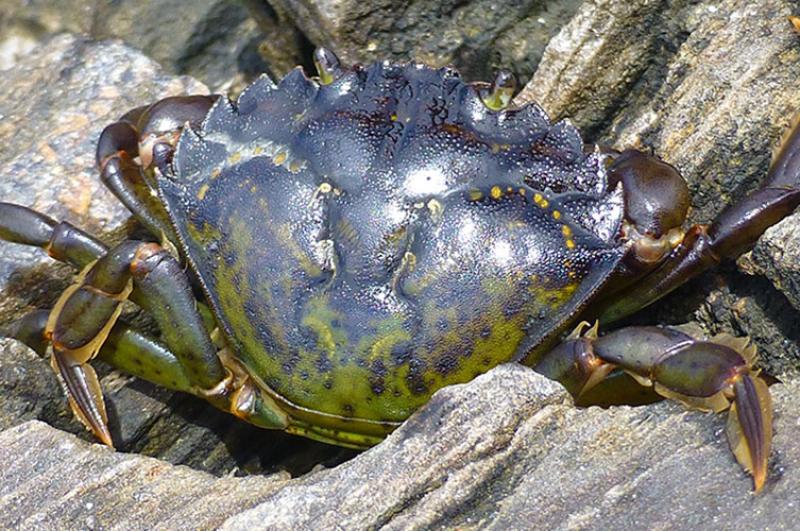
Some scientists say that the invasive European green crab is one of the world’s most damaging invasive species. They have been causing destruction to estuaries on the east and west coasts from Maine to California to Alaska. They’re native to Europe and North Africa and arrived in New England in the 1800s, likely in the ballast water of merchant ships from Europe. Populations stretch along the North Atlantic coast from Virginia up to north through New England and Maine where they have lived for a long time.
Scientists first found the invasive crabs in California in 1989. Experts believe the invasive crabs arrived on the west coast with live seafood from the east coast. Scientists have genetic evidence that tracks the origin of the shipment to northern New England. This suggests there has only been one introduction of green crabs on the West Coast. Once established, the crabs dispersed on currents as larvae. Researchers first detected them in Alaska in 2022.
Harm
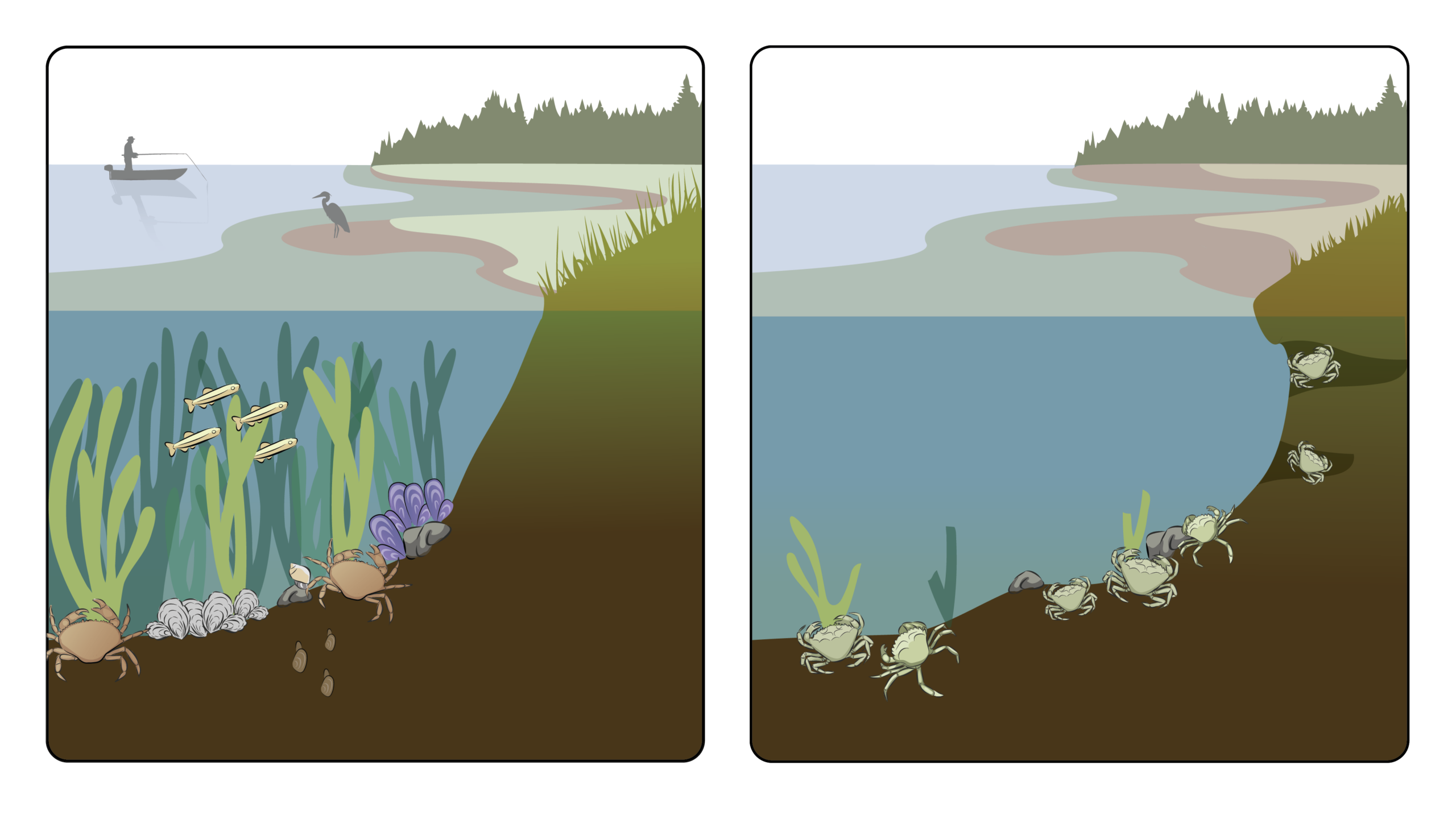
The illustration above on the left depicts a healthy nearshore habitat, while the illustration on the right shows the potential impacts of abundant green crab populations. They are active ecosystem engineers, burrowing into mudflats and salt marshes, and in doing so, destroying places critical as nursery habitat for shellfish and fish. The crabs also damage eelgrass beds, which larval fish use to hide from predators and are critical nursery habitats. On the east coast many worry the invasive crabs could severely impact some of the world’s most valuable fisheries and vulnerable ecosystems. They compete with lobsters and crabs for food and sometimes even will eat juvenile lobsters and crabs.
In Washington and Alaska, the crabs eat juvenile king crab as well as juvenile salmon and clams, mussels and oysters. They outcompete Dungeness crabs for food and habitat, destroying eelgrass beds. If populations become established, green crabs could potentially damage Alaska’s multi-billion-dollar fisheries industries, especially for salmon, crab, and mariculture operations. “These effects would ripple out to the native salmon, migratory shorebirds, and humans that rely on pocket estuaries and salt marshes for protection, recreation, and sustenance.”
Climate change
Not only are green crabs voracious predators but they can withstand changing temperatures, low salinity and low oxygen levels. Many of the other species they compete with and prey on are not as resilient and are unable to move in response to changes in climate. Green crab populations are expected to increase with climate change, threatening ecosystems already vulnerable to climate change impacts.
Sea Otters to the Rescue
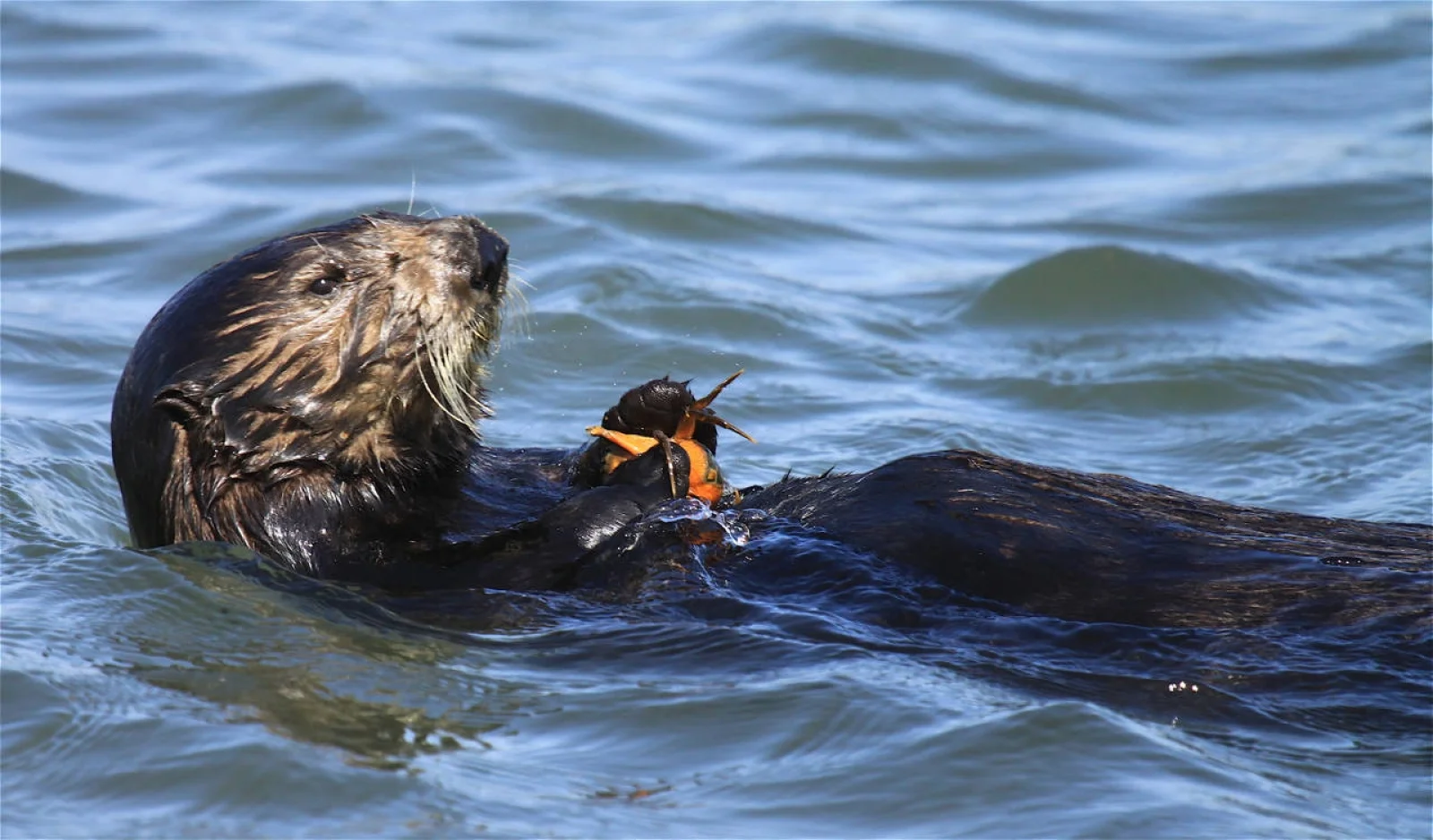
On some parts of the west coast, one solution is more protection for sea otters, which love this delicacy and are voracious predators themselves. In Elkhorn slough researchers estimate that sea otters eat between 50,000 and 120,000 crabs a year!
Another solution to decreased the numbers of green crabs is to catch and eat them. Here are some recipes. Of course, this can’t really make a dent in the problem.