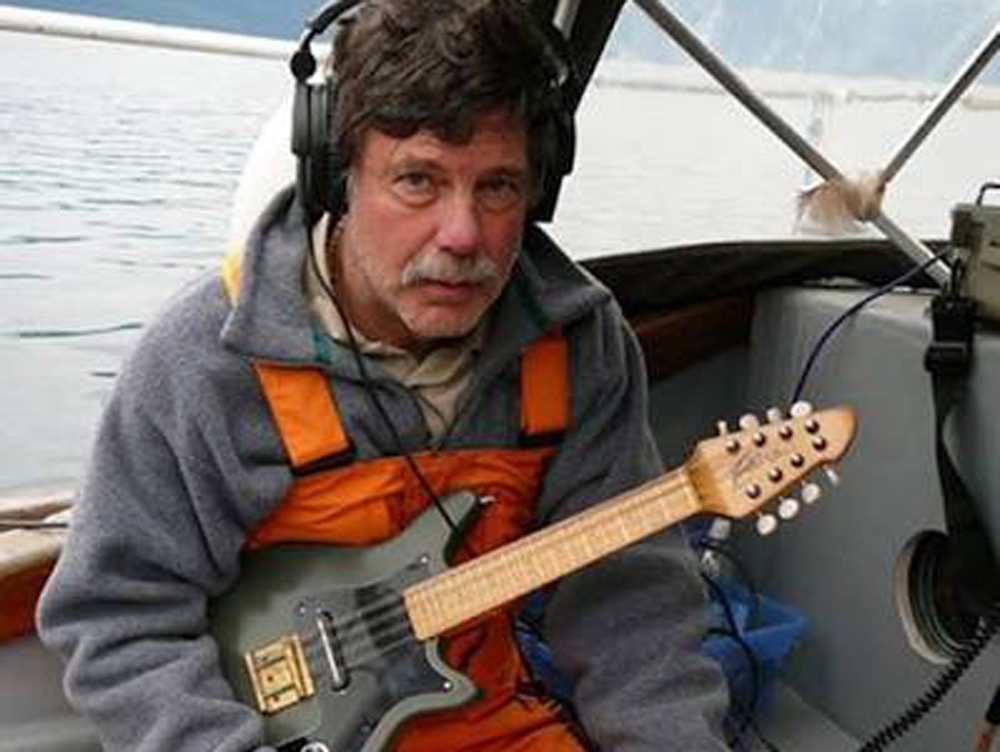
While reading ‘Talk of the Town’ in the New Yorker on a Sunday afternoon, I spotted ‘Dept of Groove’ featuring a line drawing of a whale with musical notes. ‘Whoa, what’s this about?’ This wildlife troubadour, Jim Nollman, struck me as being one of the most delightful kinds of teachers I had encountered. By coproducing underwater tunes with marine wildlife, Jim expands our connection to the animal kingdom. Proving that music transcends cultures and species!
The New Yorker article highlighted a group of about two hundred people who had gathered on the Lower East Side to celebrate the release of ‘Orcas’ Greatest Hits’ by Jim Nollman. If you haven’t heard ‘Orca’s Greatest Hit’s’ now’s your chance. (My personal favorite is ‘Rattle & Conk’).
Kids as Collaborators
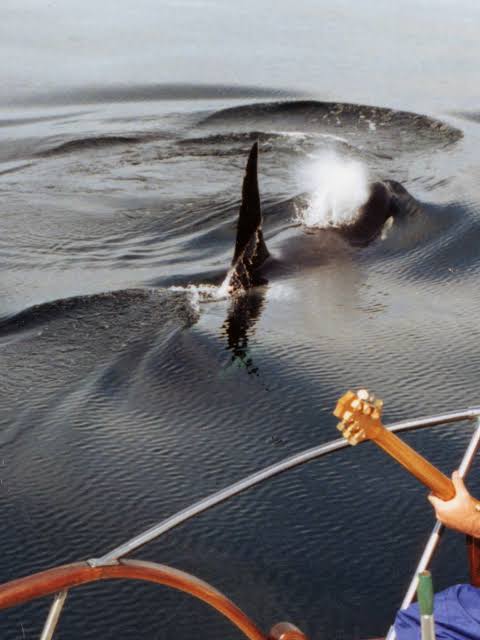
“I have built a career developing methods and techniques to experiment with music as a potential way to communicate with animals. I invited anyone who expressed a clever idea about how to communicate with orcas. Often that included children who wrote songs to sing with the whales,” said Jim. “I was delighted to give kids the opportunity to sing songs they wrote, through an underwater sound system, while orcas were close by and singing to
Jim currently resides in the San Juan Islands in the Pacific Northwest. He was born just outside of Boston in 1947 with fond memories of spending hours sitting in a tree over a creek across the street from his home. “I recall being so impressed by orioles building their nests. I would compare their brilliance to tanagers, goldfinches, and the other colorful birds in my neighborhood,” reminisced Jim.
At about the age of seven Jim became obsessed with early rock and roll of the time, including Little Richard, Chuck Berry, and the Everly Brothers. “That love of music with a groove has stayed with me my entire life,” said Jim.
How Do Animals Respond to Music?
When asked how species respond differently to sound, Jim responded, “Every species responds differently. It's the same with every human culture that has developed unique music,” said Jim. He went on to give us two examples: “First, wolves have unique calls for various times of the day. Like wolves, Indian ragas are also performed for specific times of the day. Second, many bird species have developed distinct calls for different locales. Finches from the east coast have a different dialect then the same finch species living in the Midwest,” added Jim.
Grooving
How does Jim know when he is connecting with wildlife? “I never try to copy the sounds an animal vocalizes within its own social group. If I did that, I would not be able to tell if it was singing with me or talking to its own family members. With orcas, if they were vocalizing certain notes, I lower those notes half a step to see if they follow my example. The best way I have found to understand if they are listening to me, is to create a groove, a musical heartbeat, and see if they join the groove,’ stated Jim.
Jim believes seeking a common ground for making music with wildlife offers a basis for a constructive relationship with them. “And, if the music is good, it becomes an easily accessible tool to teach our relationship with animals,” says Jim.
Snapping Along with that Crazy Shrimp Beat
“I once recorded, with my hydrophone, a huge cruise ship playing Latin music that was going through the orcas home at about midnight. Just after it passed, there was a cacophony of bottom dwelling fish and invertebrates, such as shrimp, croaking and clicking very loudly,” said Jim. You can hear the crazy sounds of the snapping shrimp on this recording titled, ‘Calm’.”
Musician, Environmentalist, Teacher…?
I mentioned to Jim that I was struggling with how to position him for this article. “Over the years, interviewers have been fitting me into any and all categories of animal enthusiast,” said Jim. Early on, Jim spent three winters working for Greenpeace to protect dolphins from mass slaughter by Japanese fisherman. (I guess we can add environmental activist to the list).
A Diverse Career in Interspecies Communication
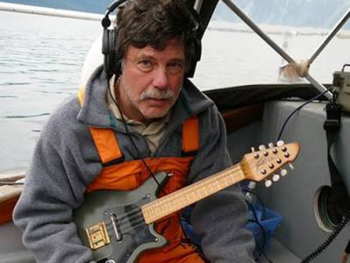
For fifteen summers Jim played electric guitar with one pod of wild free-swimming orcas who live in the straits. “Perhaps my most famous recording is of myself singing the old folksong Froggy Went a Courting with 300 turkeys for a thanksgiving day radio show,” shared Jim.
Jim has also published research papers in Europe about ancient petroglyphs in northern Russia that show a single beluga whale spy hopping and singing to a woman singing to the whale.
Before retiring, Jim had a seven-year contract with the US Navy where he served as the ombudsman, “basically representing the whales themselves,” on a project to teach the Navy how to better protect whales who were then being killed during the Navy's own sonar exercises.
When I asked Jim what creatures he most wants to make music with now, he responded, “Owls. Especially the barred owls in my neighborhood. I am currently recording a new album called The Cowbird Variations,”
Ecological Stewardship
The ways that Jim demonstrates his sense of protection of the environment is by “presenting my own brand of evidence to demonstrate that human survival may likely depend upon the next generations’ learning a more heartfelt and sensitive understanding of biodiversity,” said Jim. He added, “Our best hope is to both teach and learn how to treat our planet with empathy and compassion.”
You can learn more about Jim here.